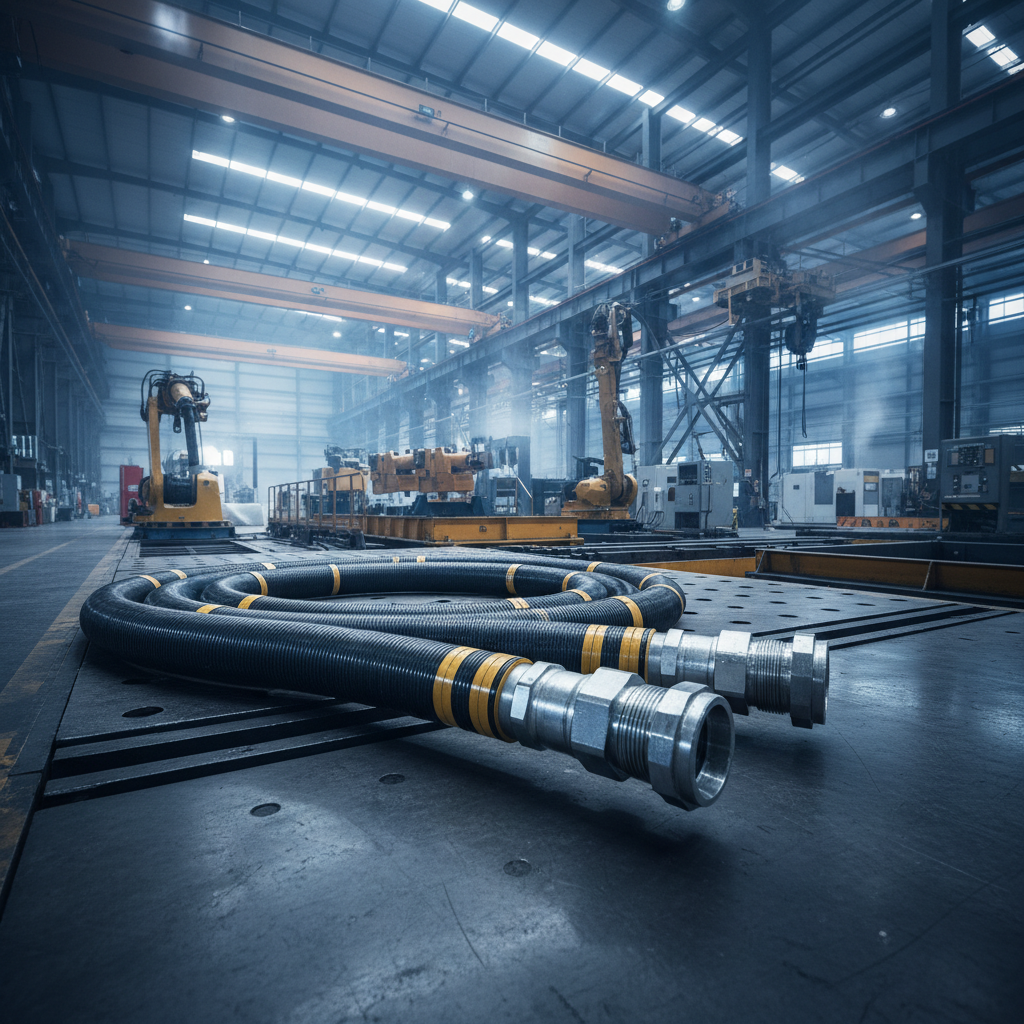
Selecting a reliable source for hydraulic hose china involves more than comparing price points; it requires a deep understanding of pressure ratings, material compatibility, and the rigorous environment in which the hose will operate. For industrial procurement managers, the challenge lies in balancing the cost-efficiency of overseas manufacturing with the uncompromising safety standards required for high-pressure hydraulic systems.
The global shift toward integrated supply chains has positioned Chinese rubber and plastic manufacturers as central hubs for specialized hose production. However, the disparity in quality between generic PVC lines and high-performance reinforced hydraulic hoses means that technical verification is paramount before any large-scale procurement decision is made.
This guide explores the technical landscape of hydraulic hose sourcing, analyzing the critical performance markers that distinguish industrial-grade components from commercial alternatives, and providing a framework for evaluating suppliers based on actual manufacturing capacity and material integrity.

Understanding the Technical Architecture of Hydraulic Hoses

A high-performance hydraulic hose is not a simple tube but a multi-layered engineered component designed to contain immense energy. The architecture typically consists of three primary layers: the inner tube, the reinforcement layer, and the outer cover. The inner tube must be chemically compatible with the hydraulic fluid to prevent degradation, while the reinforcement—often consisting of high-tensile steel wire braids or spirals—provides the structural integrity needed to withstand extreme internal pressures.
The outer cover serves as the first line of defense against external threats, such as abrasion, ozone exposure, and weather-induced cracking. In the context of manufacturing in China, the integration of advanced synthetic rubber blends has allowed for a significant increase in the flexibility-to-strength ratio, making these hoses suitable for tight-radius bends without sacrificing pressure capacity.
Precision in the bonding process between these layers is what ultimately determines the hose's lifespan. Delamination, often caused by poor vulcanization, is a common failure point in lower-tier products. Therefore, verifying the manufacturing process—such as the use of scientific quality management systems—is essential for ensuring the safety of the entire hydraulic circuit.
Critical Performance Metrics for Industrial Pressure Systems
When evaluating hoses, the Working Pressure (WP) and Burst Pressure are the most critical data points. The burst pressure is typically four times the working pressure, providing a safety factor of 4:1, which is the industry standard for most hydraulic applications. However, these numbers are only valid if the hose is tested under standardized conditions across its entire length.
Beyond pressure, the "Minimum Bend Radius" is a vital metric. If a hose is installed in a curve tighter than its rated radius, the reinforcement wires can shift or fatigue, leading to premature failure. This is particularly important for complex machinery where space is limited and hose routing is constrained.
Temperature range also plays a decisive role. Extreme cold can make the rubber brittle, leading to cracks, while extreme heat can soften the inner tube, potentially causing it to collapse under vacuum or expand excessively under pressure. Selecting a hose with the correct polymer base ensures stability across the operating temperature spectrum.
Primary Application Scenarios and Material Demands
Hydraulic hoses are deployed across diverse environments, each imposing unique stressors on the material. In construction machinery, such as excavators, hoses must withstand constant movement and external abrasion from debris. Here, an abrasion-resistant outer cover and high-flexibility reinforcement are non-negotiable requirements.
Industrial factory settings often require hoses that can handle different fluids, moving from standard hydraulic oils to more corrosive synthetic fluids. In these cases, the chemical composition of the inner tube becomes the priority. Specialized hoses, such as those used in food-grade or chemical processing, require specific certifications to ensure no contamination occurs during fluid transfer.
Another demanding scenario is found in dredging and silt conveyance. These operations require hoses that combine hydraulic strength with extreme abrasion resistance to handle sand and water suction. The use of helix steel reinforcement combined with synthetic materials allows these hoses to work under severe conditions without distortion, preventing clogs and protecting the system from abrasive wear.
Evaluating Pressure Resistance and Durability Benchmarks
To objectively compare hose performance, industry professionals look at fatigue life and impulse testing. Impulse testing involves rapidly cycling the pressure from a minimum to a maximum value, simulating the "hammer" effect seen in real-world hydraulic systems. A hose that passes 100,000 cycles without leakage is considered significantly more durable than one that fails at 20,000.
The following data represents relative performance benchmarks when comparing standard commercial-grade hoses against high-specification industrial hoses designed for extreme environments.
hydraulic hose china Performance Metrics
As illustrated, the higher-specification hoses demonstrate a marked improvement in impulse endurance and abrasion resistance. This is achieved through the use of superior raw materials and a more precise vulcanization process, which ensures that the steel reinforcement is perfectly bonded to the rubber matrix.
Strategic Sourcing and Supplier Quality Verification
Sourcing from a manufacturer like Guangrao Juyuan Rubber And Plastic Co., Ltd. offers a strategic advantage in terms of cost reduction, as direct factory-to-customer shipping eliminates middleman margins. However, the procurement process must still be rigorous. Buyers should request detailed technical data sheets (TDS) and verify that the manufacturer employs a complete and scientific quality management system.
A key indicator of supplier reliability is the ability to provide customized solutions. For instance, the capacity to produce special-shaped rubber hoses or specific SAE 100 R4 and R10 models indicates a level of technical maturity and equipment flexibility that generic traders lack.
Furthermore, buyers should investigate the raw material supply chain. Manufacturers with direct access to high-quality raw materials can maintain more consistent product quality across different batches, reducing the risk of "lottery" quality where one shipment is perfect and the next fails prematurely.
Evolution of Synthetic Polymers in Hose Manufacturing
The industry is currently seeing a transition toward more advanced thermoplastic elastomers (TPE) and reinforced synthetic rubbers. These new materials are designed to provide better resistance to permeability and a wider operating temperature range, which is critical as hydraulic systems are pushed to higher pressures to increase machinery efficiency.
Innovations in reinforcement geometry are also emerging. While standard braiding is common, spiral-wound reinforcement is becoming more prevalent for ultra-high-pressure applications, as it distributes the load more evenly and reduces the tendency of the hose to lengthen under pressure.
Future developments may include "smart hoses" with integrated sensors to monitor pressure spikes or wear in real-time. While these are currently in the early stages of adoption, the move toward predictive maintenance will likely force manufacturers to integrate more sophisticated materials that can house embedded electronics without compromising structural integrity.
Comparison Guide for Hydraulic Hose Selection
Choosing the right hose requires matching the technical specifications to the operational environment. The table below provides a decision-making framework based on typical industrial requirements, helping procurement officers differentiate between the available options.
It is important to remember that over-specifying a hose (using a much higher pressure rating than needed) can lead to unnecessary stiffness and higher costs, while under-specifying is a critical safety risk.
| Hose Category | Reinforcement Type | Primary Application | Critical Factor |
|---|---|---|---|
| Standard Hydraulic | Single Steel Braid | Low-pressure returns | Cost-efficiency |
| High-Pressure Industrial | Double Steel Braid | Heavy machinery actuators | Burst safety |
| Extreme Pressure | Spiral Wire Wrap | Hydraulic presses/Mining | Impulse life |
| Abrasive/Dredging | Steel Helix + Rubber | Silt and sand suction | Internal wear |
| Chemical/Fuel | Synthetic Polymer | Oil and gas transfer | Permeation rate |
| Food/Pharmaceutical | Reinforced Silicone | Liquid food processing | FDA compliance |
Ultimately, the selection should be validated by a technical audit of the supplier's production facility and sample testing. For those evaluating these options, detailed product catalogs and company capabilities are available through www.jyhose.com.
Frequently Asked Questions
Conclusion
The procurement of hydraulic hoses from China represents a significant opportunity for cost optimization, provided it is managed with a technical, rather than purely financial, lens. The key to success lies in the alignment of material specifications—such as reinforcement type and polymer compatibility—with the actual stresses of the application environment.
By prioritizing suppliers who maintain scientific quality controls and offer a broad range of specialized products, companies can ensure their hydraulic systems remain safe, efficient, and durable. For professionals seeking high-quality rubber and plastic hose solutions, the technical resources available at www.jyhose.com provide a starting point for verifying specifications and sourcing reliable industrial components.