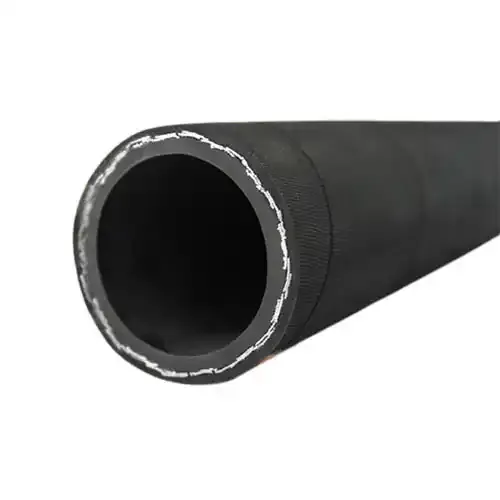
High Quality China Flame Resistant Hydraulic Hose for Fuel Transfer
When handling petroleum-based fluids in industrial environments, the margin for material failure is virtually zero. Fuel transfer systems are subjected to aggressive chemical exposure, pressure surges, and extreme environmental stressors that can rapidly degrade standard rubber compounds. The Nitrile Fuel Hose 300 PSI is specifically engineered to bridge the gap between general-purpose flexibility and industrial-grade endurance, utilizing a high-performance NBR inner core to prevent the swelling and cracking typically caused by gasoline, diesel, and aviation fuels.
For procurement managers and engineers in the construction, mining, and marine sectors, the priority is operational uptime. A single hose failure can lead to costly downtime or significant safety hazards. By integrating a high-strength synthetic textile braid with a specialized nitrile compound, this hose ensures a stable flow rate and structural integrity up to 300 PSI, providing a dependable solution for those seeking a high-quality china flame resistant hydraulic hose for demanding fluid handling applications.

Engineering the Core: Why Nitrile Rubber is Critical for Fuel Stability
The performance of any fuel-handling hose is defined by its internal chemistry. Standard rubber often undergoes a process called plasticizer extraction when exposed to refined petroleum, leading to a hose that becomes brittle or, conversely, softens and swells until it collapses under pressure. Nitrile rubber (NBR) is selected for the inner tube of this hose because of its inherent polar nature, which resists the permeation of non-polar hydrocarbon fluids.
This material selection provides several critical technical advantages:
- Dimensional Stability: The hose maintains its precise internal diameter, ensuring consistent flow rates without internal restrictions.
- Chemical Inertness: It resists degradation from biodiesel blends and kerosene, preventing the internal flaking that can contaminate sensitive engine injectors.
- Mechanical Integrity: Even under continuous contact with aggressive solvents, the inner wall remains firm, preventing the "ballooning" effect during pressure spikes.
By controlling the polymer selection and adding reinforcement additives during the compounding process, the inner tube is optimized to balance flexibility with resistance. This ensures that the hose remains maneuverable during installation while providing a robust barrier against fuel leakage.

Structural Reinforcement and Pressure Management Dynamics
Internal pressure in fuel transfer is rarely constant. Pump start-ups, rapid valve closures, and flow redirections create dynamic loads and pressure surges. To manage these forces, the Nitrile Fuel Hose is reinforced with high-strength synthetic textile yarn, meticulously braided around the inner core. This structural frame is designed to distribute internal forces evenly across the hose length, preventing localized stress points that could lead to aneurysms or bursts.
The braiding process is carefully controlled to ensure uniform tension. This precision prevents the hose from kinking when bent, a common failure point in mobile refueling setups. With a working pressure rating of 300 PSI (approximately 20 bar), the reinforcement layer provides the necessary hoop strength to maintain safety margins during peak operational loads.
Beyond pressure resistance, the reinforcement contributes to the hose's overall fatigue life. In environments where equipment is frequently moved or vibration is constant, the synthetic textile prevents the rubber from over-extending, effectively increasing the number of bend cycles the hose can endure before showing signs of wear.
Operational Value Across Diverse Industrial Landscapes
The true value of a fuel hose is measured by its performance in the field. In construction and mining, refueling trucks often operate in remote, rugged terrain where hoses are dragged over concrete, metal edges, and rocky surfaces. The abrasion-resistant outer layer of this hose is formulated to withstand these mechanical stresses, preventing outer-wall breaches that would otherwise expose the reinforcement to the elements.
Different environments present unique challenges that this hose is designed to solve:
- Marine Docks: The outer rubber resists salt air and humidity, while the nitrile core prevents fuel vapor transmission in semi-enclosed storage areas.
- Agricultural Sites: With a temperature range of -32°C to +82°C, the hose remains flexible in winter and resists hardening under the intense UV exposure of open fields.
- Maintenance Depots: The kink-resistant design allows for rapid reeling and unreeling, reducing the physical effort required by operators and minimizing downtime.
Whether it is supporting diesel distribution for heavy machinery or gasoline transfer in a fleet yard, the hose adapts to the environment. Its ability to maintain flexibility across seasonal temperature cycles ensures that operators can maneuver the line without excessive effort, regardless of the climate.
Technical Comparison: Nitrile vs. Standard Rubber Hoses
| Feature | Standard Rubber | Nitrile (NBR) Core | Operational Impact |
|---|---|---|---|
| Oil Resistance | Low to Medium | High | Prevents swelling and leakage |
| Pressure Stability | Variable | Consistent (300 PSI) | Reduces burst risk during surges |
| Temp. Range | Limited | -32°C to +82°C | Year-round operational reliability |
| Abrasion Resistance | Moderate | High (Outer Layer) | Extends service life in rough terrain |
| Fuel Permeation | Higher | Very Low | Better vapor control and safety |
Evaluating Supplier Capabilities and Quality Assurance
When sourcing fuel transfer components, the procurement focus should shift from the lowest unit price to the total cost of ownership. A low-cost hose that fails prematurely increases maintenance labor and risks environmental contamination. Guangrao Juyuan Rubber And Plastic Co., Ltd. addresses this by utilizing a complete and scientific quality management system, ensuring that every batch of hose meets industry-recognized standards for pressure and material purity.
Our manufacturing advantage stems from a direct-to-customer model and low raw material procurement costs, which allows us to provide high-quality solutions without unnecessary intermediary markups. With a dedicated R&D team and a legacy of craftsmanship, we offer customization for special-shaped rubber hoses to meet specific model requirements, ensuring a precise fit for unique machinery configurations.
For global buyers, the ability to handle large-quantity production while maintaining a quality guarantee is essential. Our focus on "craftsmanship intimate service" means we prioritize the specific needs of the end-user, whether that involves adjusting the outer layer for extreme UV exposure or optimizing the reinforcement for specific pressure profiles.
Strategic Selection Guide for Fluid Handling Systems
Selecting the correct hose requires a deep understanding of the fluid chemistry and the physical environment. A common mistake is using a general-purpose hose for diesel or gasoline transfer, which leads to rapid degradation of the inner tube. To maximize service life, engineers should first evaluate the peak surge pressure of their pumps and the average ambient temperature of the operating site.
We recommend the following selection logic for fuel transfer systems:
- High-Abrasion Zones: Prioritize hoses with reinforced outer covers to prevent structural failure from dragging.
- Variable Climates: Ensure the material specification supports the lowest expected winter temperature to avoid cracking.
- High-Throughput Systems: Verify that the pressure rating (e.g., 300 PSI) exceeds the maximum pump output by a safe margin.
As industrial standards evolve toward greater safety and environmental compliance, the transition to specialized NBR-based hoses is no longer optional. Investing in a hose that resists permeation and withstands mechanical stress is the most effective way to ensure operational continuity and workplace safety.
Frequently Asked Questions on Nitrile Fuel Hoses
What makes Nitrile (NBR) better than general rubber for fuel transfer?
Nitrile rubber is specifically engineered to resist swelling, softening, and cracking when in contact with petroleum products. Unlike general-purpose rubber, NBR maintains its mechanical integrity and dimensional stability, preventing the hose from degrading or leaking during continuous fuel exposure.
Can this hose handle pressure spikes above 300 PSI?
The hose is rated for a working pressure of 300 PSI. While the synthetic textile reinforcement helps distribute loads, it is not recommended for continuous use above this rating. For applications with extreme pressure surges, we suggest consulting our technical team for a higher-specification reinforced model.
How does the temperature range affect the hose's flexibility?
With an operational range of -32°C to +82°C, the hose is designed to remain flexible in cold climates to prevent cracking and resist hardening in high-heat environments, ensuring consistent handling and installation across all seasons.
Is the outer layer resistant to UV and ozone exposure?
Yes, the outer layer is formulated to resist UV, ozone, and moisture. This prevents the rubber from becoming brittle or cracking when stored outdoors or used in open-air industrial sites, significantly extending the service life of the product.
Can Guangrao Juyuan provide customized hose lengths or shapes?
Yes, we specialize in customizing various types of special-shaped rubber hoses with different models. Since we manage the entire process from production to marketing, we can provide tailored solutions to meet specific industrial requirements.
What are the primary industries where this fuel hose is most effective?
This hose delivers the best operational value in construction, mining, marine refueling, agricultural operations, and fleet maintenance yards where reliability in fuel transfer is critical to daily operations.
Technical References and Industry Standards
- ISO Standards for Rubber and Plastics - Industrial Hoses
- ASTM International - Material Specifications for Nitrile Rubber
- SAE International - Fluid Power and Hose Assembly Standards
- Rubber World - Technical Guides on Elastomer Compatibility
Ensuring the reliability of your fluid transfer system starts with choosing materials that match your operational reality. If you are looking for a durable, high-pressure fuel solution, Guangrao Juyuan is ready to provide the technical expertise and manufacturing capacity to support your global operations.
Related Industrial Hose Solutions