High-pressure hydraulic systems are only as reliable as the conduits that transport their fluid. When failure is not an option, the technical distinction between standard rubber and advanced synthetic materials becomes a critical decision point for engineers.
The demand for stability under extreme pressure fluctuations has shifted focus toward specialized manufacturing hubs capable of producing high-tolerance components. This is particularly evident in the rise of china thermoplastic hydraulic hose solutions, which aim to bridge the gap between flexibility and burst-pressure resistance.
This analysis examines the structural requirements of heavy-duty hydraulic hoses, the critical nature of SAE specifications, and how to evaluate the trade-offs between different reinforcement layers in demanding industrial environments.


At its core, a hydraulic hose is a pressure vessel. The fundamental challenge in designing a china thermoplastic hydraulic hose or a rubber equivalent is managing the radial expansion that occurs under load. In high-pressure settings, simple braiding is often insufficient, leading to the adoption of spiral steel wire reinforcement.
This spiral architecture allows the hose to maintain a consistent internal diameter while resisting the longitudinal stresses associated with pressure surges. By distributing the force across multiple layers of steel, the hose can withstand the immense pressures found in mining and heavy construction without risking catastrophic rupture.
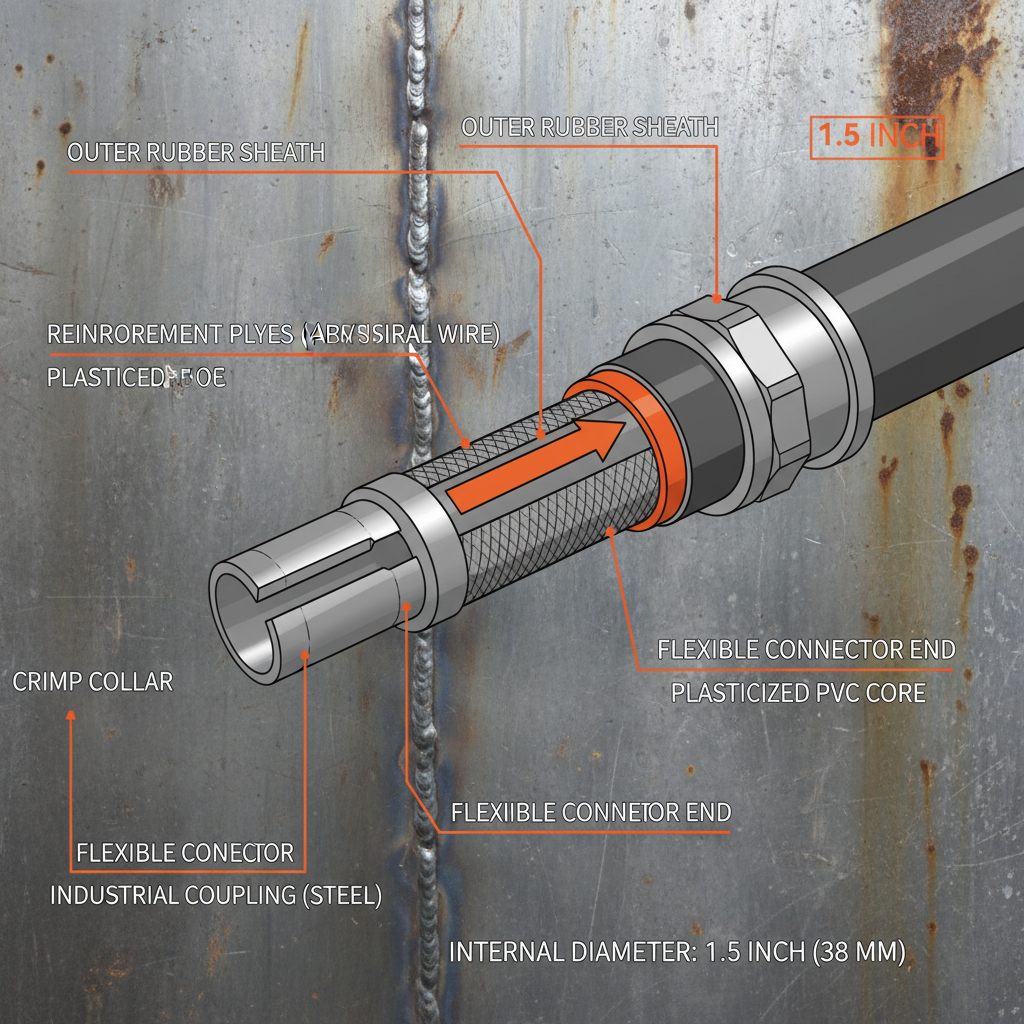
A professional-grade hydraulic hose is composed of three critical layers: the inner tube, the reinforcement layer, and the outer cover. The inner tube must be crafted from premium synthetic rubber or thermoplastic materials that are chemically compatible with the fluid being transported, whether it is mineral oil, glycol solutions, or petroleum-based hydraulic fluids.
The reinforcement layer acts as the skeleton. For heavy-duty applications, a four-layer steel wire spiral is frequently employed. This design ensures that the hose does not collapse under vacuum or explode under peak pressure, providing a safety margin that is essential for operators in hazardous environments like oil field development or mine hydraulic supports.
Finally, the outer cover serves as the first line of defense against environmental degradation. It must resist ozone, weathering, and abrasion. In construction machinery, where hoses are often dragged across abrasive surfaces, the durability of this outer layer directly dictates the service interval and overall system uptime.
Standardization is the only way to ensure interchangeability and safety in global hydraulic systems. The SAE 100 standards provide the precise tolerances and burst pressure requirements that manufacturers must meet. For instance, the SAE 100 R9 and R12 specifications are benchmarks for spiral-reinforced hoses.
The critical difference between SAE 100 R9 and R12 lies in their pressure thresholds and tolerance levels; R12 is engineered for higher pressure limits, making it essential for systems where leak-free connections under extreme stress are mandatory.
Guangrao Juyuan Rubber And Plastic Co., Ltd. utilizes these standards to ensure that every batch of hoses undergoes rigorous burst and flexibility testing. This commitment to scientific quality management allows operators to integrate these hoses into complex machinery with the assurance that the components will not become the weak point in the hydraulic circuit.
Evaluating the efficiency of a hydraulic hose requires looking beyond the maximum pressure rating. Factors such as flexibility, oil resistance, and impulse endurance are equally important. A hose that is too rigid can cause stress at the fitting connection, leading to premature leaks, while a hose with poor oil resistance will soften and fail from the inside out.
To provide a qualitative assessment, we can analyze the relative performance of different reinforcement structures across key industrial metrics. This allows engineers to select a hose based on the specific stress profile of their application rather than a single data point.
In a typical industrial setting, such as a mining site, hydraulic hoses are exposed to a combination of extreme pressure and mechanical wear. The interaction between the hose and its environment is constant; for example, a hose used in lifting and transportation equipment must withstand frequent bending cycles without the steel reinforcement layers separating or fatigue-cracking.
When deploying china thermoplastic hydraulic hose products, operators must consider the specific fluid chemistry. Using a hose that is not rated for a specific emulsion or glycol solution can lead to rapid degradation of the inner tube, potentially causing internal leaks that compromise the entire hydraulic system's efficiency.
The transition from simple textile braids to multi-layer steel spirals represents a significant leap in safety engineering. Early hydraulic hoses were prone to "ballooning" under high pressure, which increased the risk of burst failure. Modern spiral designs eliminate this by providing a rigid structural wall that contains the fluid pressure more effectively.
Current trends are moving toward hybrid materials that combine the strength of steel with the lightweight properties of advanced thermoplastics. This evolution is driven by the need for reduced machinery weight and improved fuel efficiency in construction equipment, without sacrificing the high-pressure capabilities defined by SAE 100 R12.
Moreover, the focus has expanded to include "smart" durability—hoses that can withstand higher temperature fluctuations and a wider range of chemicals. This versatility ensures that a single hose design can be adapted for multiple roles across different machinery, reducing the need for extensive spare parts inventories.
Selecting the correct hose requires a balance between cost, pressure requirements, and environmental exposure. A common error in procurement is over-specifying a hose—choosing a high-pressure R12 when an R9 would suffice—which results in unnecessary rigidity and higher costs. Conversely, under-specifying leads to dangerous failure rates.
A systematic approach involves mapping the working pressure and the peak surge pressure against the burst rating of the hose. A safety factor of at least 4:1 is generally recommended for critical applications to prevent accidental failures during unexpected pressure spikes.
By analyzing the following comparative framework, engineers can better determine which reinforcement and material profile matches their specific operational needs.
| Application Scenario | Primary Stressor | Recommended Spec | Critical Requirement |
|---|---|---|---|
| Mining Support | Extreme Static Pressure | SAE 100 R12 | Burst Resistance |
| Oil Field Drilling | Chemical Corrosion | Spiral Reinforced | Inner Tube Stability |
| Construction Lift | Dynamic Bending | SAE 100 R9 | Fatigue Life |
| Industrial Plant | Steady Flow/Low Heat | Rubber/Thermoplastic | Long-term Durability |
| Transport Logistics | Abrasion/Vibration | Steel Wire Spiral | Outer Cover Toughness |
| Agricultural Mach. | Weather/UV Exposure | Weather-resistant Cover | Ozone Resistance |
Braided hoses are typically used for lower pressure applications and offer greater flexibility. In contrast, spiral reinforced hoses, such as those meeting SAE 100 R12 standards, use layers of steel wire wrapped in a spiral. This design is specifically engineered to handle significantly higher working pressures and provides better resistance to the expansion and contraction caused by pressure surges, making them ideal for heavy-duty industrial machinery.
Compatibility depends on the chemical composition of the inner tube. You must verify if the material is rated for petroleum-based oils, mineral oils, or synthetic fluids like glycol. Using an incompatible hose can lead to the inner tube swelling or degrading, which restricts flow and eventually causes the hose to burst. Always check the manufacturer's technical data sheet for a fluid compatibility matrix before installation.
These specifications define the minimum burst pressure and maximum working pressure for high-pressure hoses. Adhering to these standards ensures that the hose can handle the operational loads of the system with a predefined safety margin. If a hose does not meet these exact tolerances, it may fail under conditions it was theoretically designed for, posing a severe risk to operators and machinery.
This is generally not recommended if the system operates at the pressure thresholds defined for R12. While an R12 hose can usually perform the job of an R9, the reverse is not true. Substituting a lower-rated hose in a high-pressure system significantly increases the risk of rupture. You should only downgrade the specification if the system's maximum peak pressure is well within the R9's safe operating limit.
Key warning signs include visible cracking or "checking" of the outer cover, blistering of the tube surface, and any seepage of fluid at the coupling points. Additionally, if the hose feels unusually stiff or shows signs of kinking, the internal steel reinforcement may be compromised. Regular inspections are critical to prevent catastrophic failure in heavy-duty environments.
A factory-direct model, like that practiced by Guangrao Juyuan Rubber And Plastic Co., Ltd., reduces the number of intermediaries, which typically lowers the cost without compromising quality. Since the manufacturer manages the quality control system directly from raw material procurement to the final pressure test, there is better traceability and consistency across batches, ensuring the product meets the rigorous industrial standards required for high-pressure use.
The integrity of a hydraulic system depends entirely on the synergy between pressure requirements and hose specifications. By prioritizing SAE standards and understanding the mechanical advantages of spiral reinforcement, operators can significantly reduce downtime and enhance workplace safety.
Investing in a professionally crafted china thermoplastic hydraulic hose ensures that critical machinery in mining, construction, and oil exploration remains operational under the most demanding conditions. Precision in selection today prevents systemic failure tomorrow.