

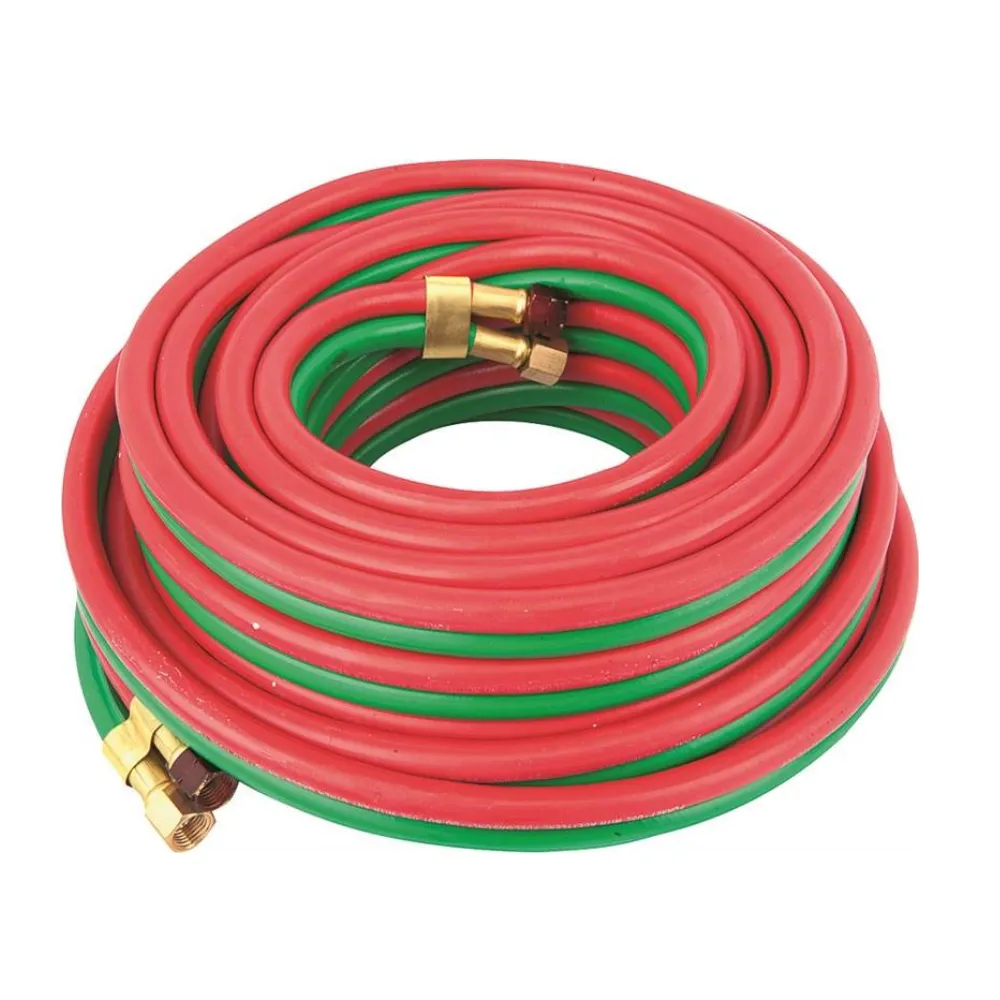
0xygen hose is used to supply oxygen and acetylene hose is used to supply acetylene for welding operation and cutting. Other gases can also be transported, such as carbon dioxide, nitrogen, argon and fuel gases, natural gas, methane and propane. Mainly used in transport manufacturing, ship building, aircraft manufacturer and metal products, etc.
How Does the Hose Structure Ensure Stable and Safe Gas Flow?
Welding and cutting operations rely on a steady, controlled flow of oxygen and acetylene to produce precise flame characteristics. Any fluctuation or contamination in the gas supply can affect the quality of the weld, alter combustion behavior, or even create safety risks. The Oxygen Acetylene Welding Hose is engineered specifically to support stable and secure gas transport through a construction method that reinforces durability, flexibility, and chemical compatibility.
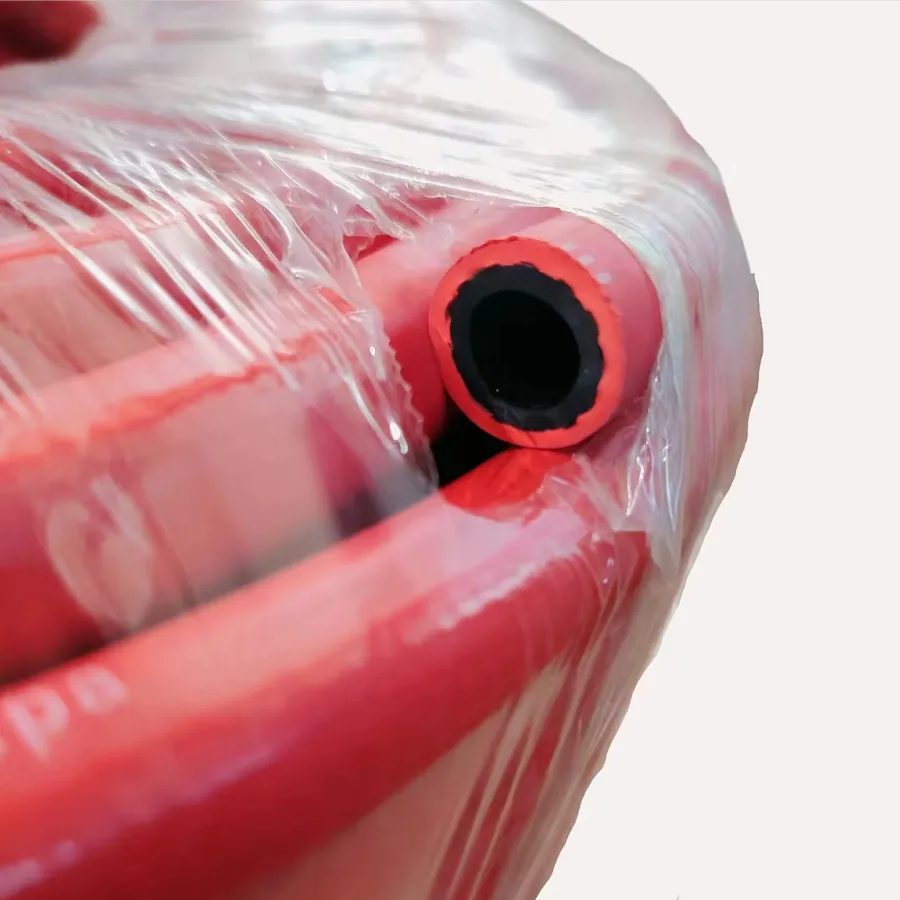
The inner tube is made from black synthetic rubber formulated to remain stable when exposed to oxygen and fuel gases over long periods. Some rubber compounds can harden, crack, or absorb hydrocarbons, eventually shedding particles into the gas stream or restricting flow. The selected inner tube compound resists these effects, maintaining structural integrity, flexibility, and cleanliness. This results in consistent gas delivery, which is essential for maintaining flame stability during detailed welding tasks.
Reinforcement is provided by high-strength synthetic cord, arranged to resist pressure fluctuations and mechanical stress. When working in fabrication shops, shipyards, construction sites, and field repair settings, hoses are constantly dragged, coiled, uncoiled, and bent around metal structures. The reinforcement ensures that the hose does not kink easily, preventing sudden flow blockages that could destabilize the torch output. It also helps the hose withstand internal pressure changes that occur when regulators are adjusted or when torch valves are opened and closed.
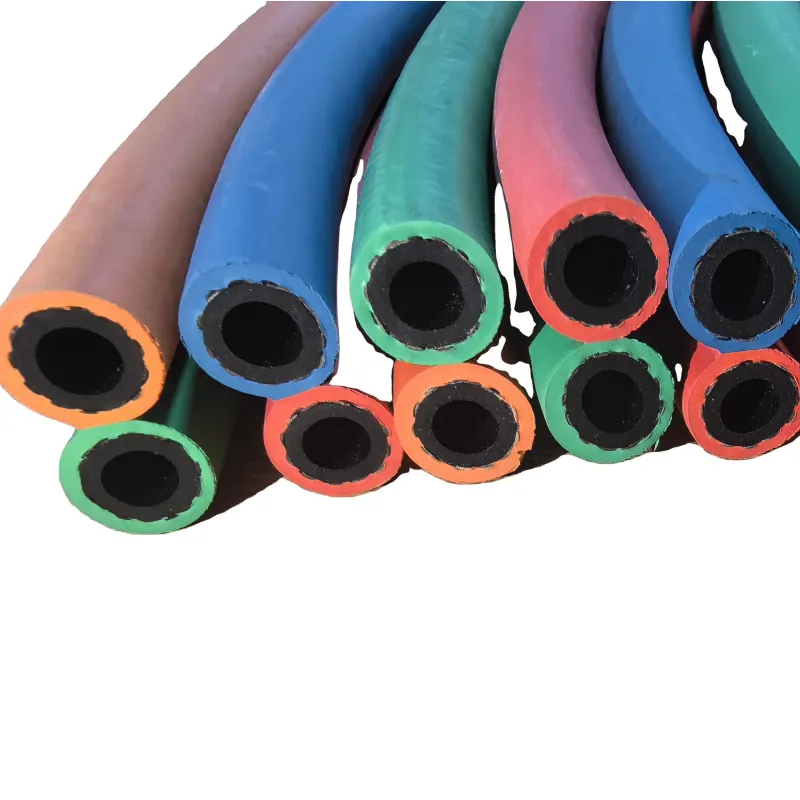
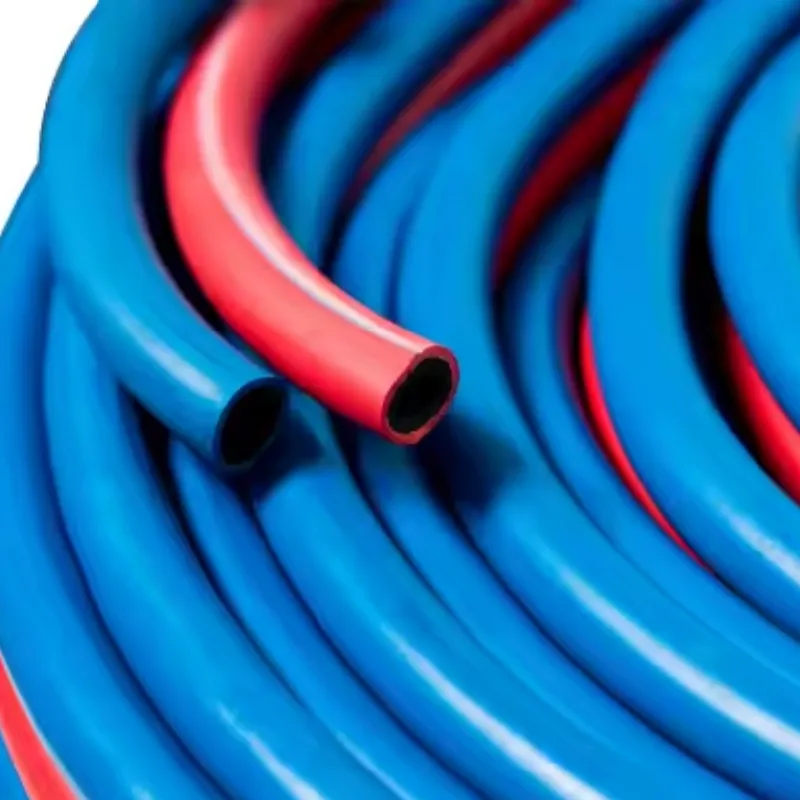
The outer layer is constructed from synthetic rubber and is available in blue, red, or green. These colors play a functional role by helping workers quickly identify the intended gas line—oxygen, acetylene, or an alternate fuel gas—reducing handling mistakes and improving operational safety. The outer cover also resists abrasion, sparks, minor impacts, and contact with shop surfaces. Welding environments are rarely clean or stationary, and equipment moves frequently. The hose surface must withstand these conditions without softening, cracking, or peeling.
With a working temperature range of -32℃ to 80℃ (-90℉ to +176℉), the hose maintains flexibility in cold storage conditions and stability near heated work surfaces. Maintaining consistent handling behavior across temperature changes ensures predictable routing and torch maneuverability. Altogether, the hose’s construction supports long-term reliability, user control, and safe flame performance in professional welding and cutting operations.
Where Does This Hose Perform Best in Welding and Cutting Applications?
The Oxygen Acetylene Welding Hose is designed for a wide range of industrial and field-based operations where metal cutting, heating, and joining are required. In workshops and fabrication facilities, it connects to torches, regulators, and storage cylinders for precise control of the flame needed for welding steel, brazing copper, or heating metal components for shaping. The hose’s stable handling characteristics make it suitable for bench work as well as overhead and vertical welding tasks where smooth torch movement is essential.
In shipyards and marine repair environments, exposure to salt, heat, and metal surface abrasion demands durable hose construction. The abrasion-resistant outer cover and reinforced core allow the hose to be dragged across decks, platforms, and steel structures without significant wear. The clear gas color identification helps ensure correct line connections in busy work environments.
Construction and field service operations benefit from the hose’s flexibility and structural stability. Gas welding systems are often transported to remote job sites, where hoses must remain reliable even when coiled, transported, or exposed to dust, moisture, and rough handling. Here, the hose’s resistance to cold weather hardening and outdoor abrasion allows crews to maintain consistent workflow.
Automotive repair and custom fabrication shops use this hose for metal panel welding, exhaust work, frame repair, and component shaping. The hose’s predictable bend radius assists technicians in achieving consistent flame profiles during delicate work. In metal art and blacksmithing environments, where shaping and joining often require heated control rather than high-pressure cutting, the hose’s stability supports precise torch work.
Because oxygen and acetylene systems are versatile in heating, forming, brazing, cutting, and joining metal, the hose must adapt to many torch configurations, lengths, and movement styles. This hose provides that adaptability through a balance of strength, flexibility, and long-term reliability across varied operational conditions.
How Does the Hose Maintain Performance During Long-Term Gas Exposure?
Gas welding hoses face ongoing exposure to oxygen, fuel gases, heat, and physical movement. Over time, some hoses may stiffen, develop microcracks, or begin to allow gas permeation, compromising both performance and safety. The Oxygen Acetylene Welding Hose maintains its performance through a material formulation designed to handle long-term chemical contact and environmental stress.
The synthetic rubber inner tube is formulated to resist oxidation and hydrocarbon absorption. Oxygen exposure can accelerate rubber aging, while acetylene and similar gases can gradually influence material elasticity. This hose is compounded to slow these chemical effects, allowing it to maintain flexibility and structural stability throughout extended use. This stability supports consistent gas flow, which is essential for maintaining flame temperature and shape during welding.
The reinforcement layer prevents weakening caused by repeated pressure cycles. Welding and cutting involve frequent opening and closing of valves, producing internal surges. The synthetic cord reinforcement distributes these forces evenly throughout the hose wall, reducing fatigue damage and extending service life.
The outer cover protects against external hazards—sparks, abrasion from metal edges, oil or coolant contact, and mechanical dragging. Many failures originate externally, not internally. By resisting cracking and surface wear, the outer layer helps prevent deep structural damage and leaks. This contributes directly to operator safety and reduces downtime from equipment replacement.
Temperature resistance enables the hose to maintain expected handling characteristics in both cold storage situations and hot metalworking environments. This predictability allows welders to maintain consistent control without compensating for unexpected hose stiffness or slack.
The result is sustained reliability. The hose continues to provide stable gas delivery, safe handling, and predictable torch performance through ongoing use in demanding welding and cutting environments.
The welding hose consists of three layers with different material structure.
The inner tube is made of synthetic rubber, therefore the oxygen, acetylene and gas can't leak out.
The reinforcement is made from high strength synthetic cord, to withstand internal and external high pressure.
The synthetic rubber cover is to play the protective function, so the rubber hose could resistant to abrasion, corrosion, air oxidation, extreme weather, ozone, aging, sunlight and cutting, also with longer service life.
During use for safety, keep the oxygen hose and acetylene hose away from inflammable materials and fire. Routine inspections and maintenance need to be done regularly to prevent leakage and block. The most important thing is not mix the oxygen and acetylene to prevent explosion.
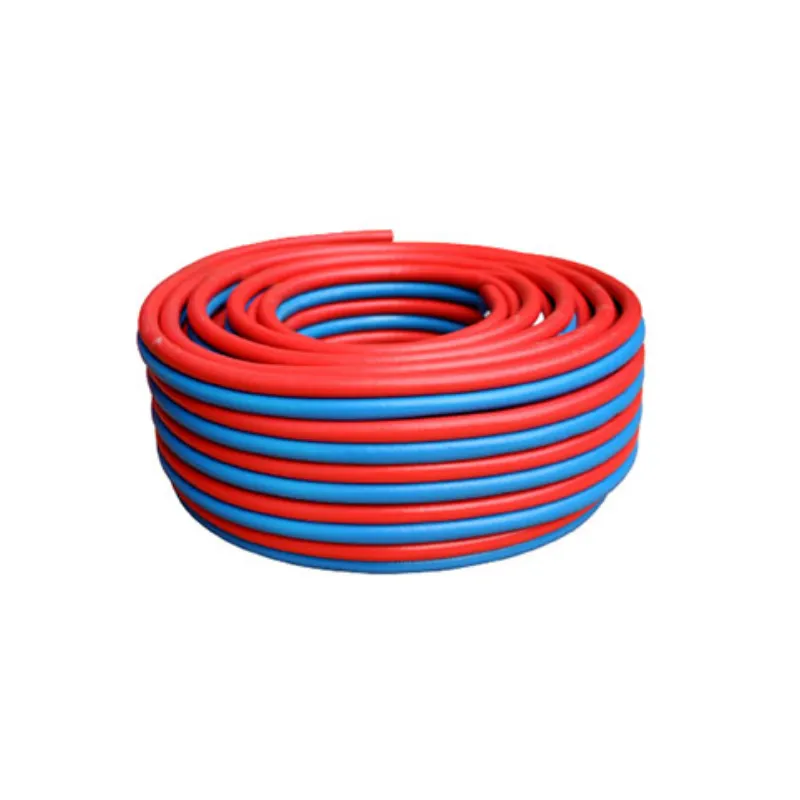
0xygen acetylene twin welding hose is also available.
RUBBER TWIN WELDING HOSE 300 PSI
| I.D | O.D | W.P | B.P | L | ||||
| inch | mm | mm | bar | psi | bar | psi | m | ft |
| 3/16" | 4.8+4.8 | 12+12 | 20 | 300 | 60 | 900 | 100 | 330 |
| 1/4" | 6.4+6.4 | 13+13 | 20 | 300 | 60 | 900 | 100 | 330 |
| 5/16" | 7.9+7.9 | 15+15 | 20 | 300 | 60 | 900 | 100 | 330 |
| 5/16"+3/8" | 7.9+9.5 | 15+17 | 20 | 300 | 60 | 900 | 100 | 330 |
| 3/8" | 9.5+9.5 | 17+17 | 20 | 300 | 60 | 900 | 100 | 330 |
Oxygen Hose 300PSI/Acetylene Hose 300PSI
| I.D | O.D | W.P | B.P | L | ||||
| inch | mm | mm | bar | psi | bar | psi | m | ft |
| 3/16" | 4.8 | 12 | 20 | 300 | 60 | 900 | 100 | 330 |
| 1/4" | 6.4 | 13 | 20 | 300 | 60 | 900 | 100 | 330 |
| 5/16" | 7.9 | 15 | 20 | 300 | 60 | 900 | 100 | 330 |
| 3/8" | 9.5 | 17 | 20 | 300 | 60 | 900 | 100 | 330 |
| 1/2" | 12.7 | 21 | 20 | 300 | 60 | 900 | 100 | 330 |
| 5/8" | 15.9 | 26 | 20 | 300 | 60 | 900 | 100 | 330 |
| 3/4" | 19.1 | 29 | 20 | 300 | 60 | 900 | 100 | 330 |
| 1" | 25.4 | 36 | 20 | 300 | 60 | 900 | 100 | 330 |
Mainly used in transport manufacturing, ship building, aircraft manufacturer and metal products, etc.
Aging resistance
Abrasion resistance
Weather and ozone resistant
Good flexibility without distortion
Latest News
-
Professional Guide to Finding High Quality Industrial Hose for Sale
-
Premium Industrial Rubber Water Hoses for Sale and Buying Guide
-
Find High Quality Rubber Tubes for Sale Meeting Your Specific Needs
-
-
Find High Quality Rubber Hose on Sale for All Your Application Needs
-
Comprehensive Guide to Spiral Hydraulic Hose Protector Selection and Application
-
Comprehensive Guide to Selecting the Ideal Spiral Guard Hose for Your Needs
-
Comprehensive Guide to Hydraulic Hose Spiral Guard Selection and Application


